




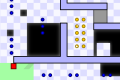
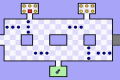
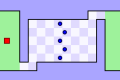
Frakass Portal is a browser-based action game where the player controls a character in fast-paced combat scenarios across confined arenas. The gameplay focuses on movement, attack timing, and positioning against multiple opponents. Each session places the player in direct confrontation with enemies, requiring continuous input to maintain control and avoid damage.



Frakass Portal
Advertisement
Advertisement







Frakass Portal is a browser-based action game where the player controls a character in fast-paced combat scenarios across confined arenas. The gameplay focuses on movement, attack timing, and positioning against multiple opponents. Each session places the player in direct confrontation with enemies, requiring continuous input to maintain control and avoid damage.
Core Gameplay and Arena Structure
The game is built around short combat encounters that take place in limited spaces. The player must eliminate enemies while managing movement within the arena. There is no large-scale exploration, and each stage is designed to keep the action concentrated.
Opponents appear in waves or groups, increasing pressure over time. The player must react to multiple threats simultaneously, adjusting position to avoid being surrounded.
Controls and Combat Actions
Frakass Portal uses a direct control scheme where the player moves the character and executes attacks in real time. Actions are responsive and require coordination to maintain effectiveness during combat.
Typical gameplay actions include:
- Moving the character to avoid enemy contact
- Performing attacks to eliminate targets
- Timing actions to prevent taking damage
- Managing spacing between enemies
- Reacting quickly to changes in enemy behavior
These mechanics form the core of every encounter.
Enemy Behavior and Difficulty
Enemies differ in movement patterns and attack frequency. Some approach directly, while others may use ranged or delayed attacks. This variation requires the player to adapt positioning and timing rather than rely on a single approach.
Difficulty increases through the number of enemies and the speed of encounters. As pressure builds, the player must make faster decisions and maintain consistent control.
Replay and Performance Focus
Frakass Portal is designed for repeated sessions where players aim to improve efficiency and survival. Since encounters follow similar structures, progress comes from refining movement and attack timing.
The game emphasizes consistency in execution. Success depends on maintaining control in confined spaces, reacting to multiple threats, and improving performance through repeated attempts rather than unlocking new systems.
Comments (0)


2026
